How to Arrive at Work Not Sweaty on an E-Bike Commute
Quick Answer: Ride the first 10 minutes noticeably slower than feels natural, use a higher assist level on the first climb rather than the last, and keep your average speed under about 15 mph on humid mornings. Sweat is driven by core temperature, which lags effort by roughly 8 to 12 minutes - so what makes you damp at the office is usually how hard you rode at the start, not the end.
Most people fix e-bike commute sweat by turning the assist up, then get frustrated when it barely helps. The assist level matters much less than the temperature curve of your own body.
Why do you still sweat when the motor is doing the work?
Because sweating is a response to core temperature, not to how hard your legs are working in this exact moment.
Your body heats up during effort, then keeps releasing that heat for several minutes after the effort stops. That lag is roughly 8 to 12 minutes. Which means the sprint you did to make a light at minute four is what shows up on your shirt at minute fifteen, long after you settled into a comfortable cruise.
Air flow is the other half. Moving air removes heat by evaporation, but above roughly 70 percent humidity that evaporation slows sharply - which is why an August ride at 78F and humid feels far worse than a June ride at 82F and dry.
So the two levers are: do not spike your core temperature early, and keep air moving over your skin. Assist level only matters insofar as it helps you do those two things.
What pace should you actually ride?
Under 15 mph average on humid mornings. Above that, wind chill helps, but the effort required to hold it on any grade generates more heat than the airflow removes.
First 10 minutes at conversational effort. This is the single most effective change, and it is the one nearly everyone gets wrong. Riding easy for ten minutes and normal for twenty gets you there almost as fast and dramatically drier than riding hard for five and easy for twenty-five.
Cadence over torque. Spin at 75 to 85 rpm in a lower gear rather than pushing a heavy gear. Same speed, less heat, less quad burn.
Use the assist asymmetrically. Most people ride low assist until they get tired and then bump it up. Reverse it - high assist on the first climb, lower assist on the flat later. Front-load the help, because that is where the heat you cannot undo gets created.
What should you wear and what should you carry?
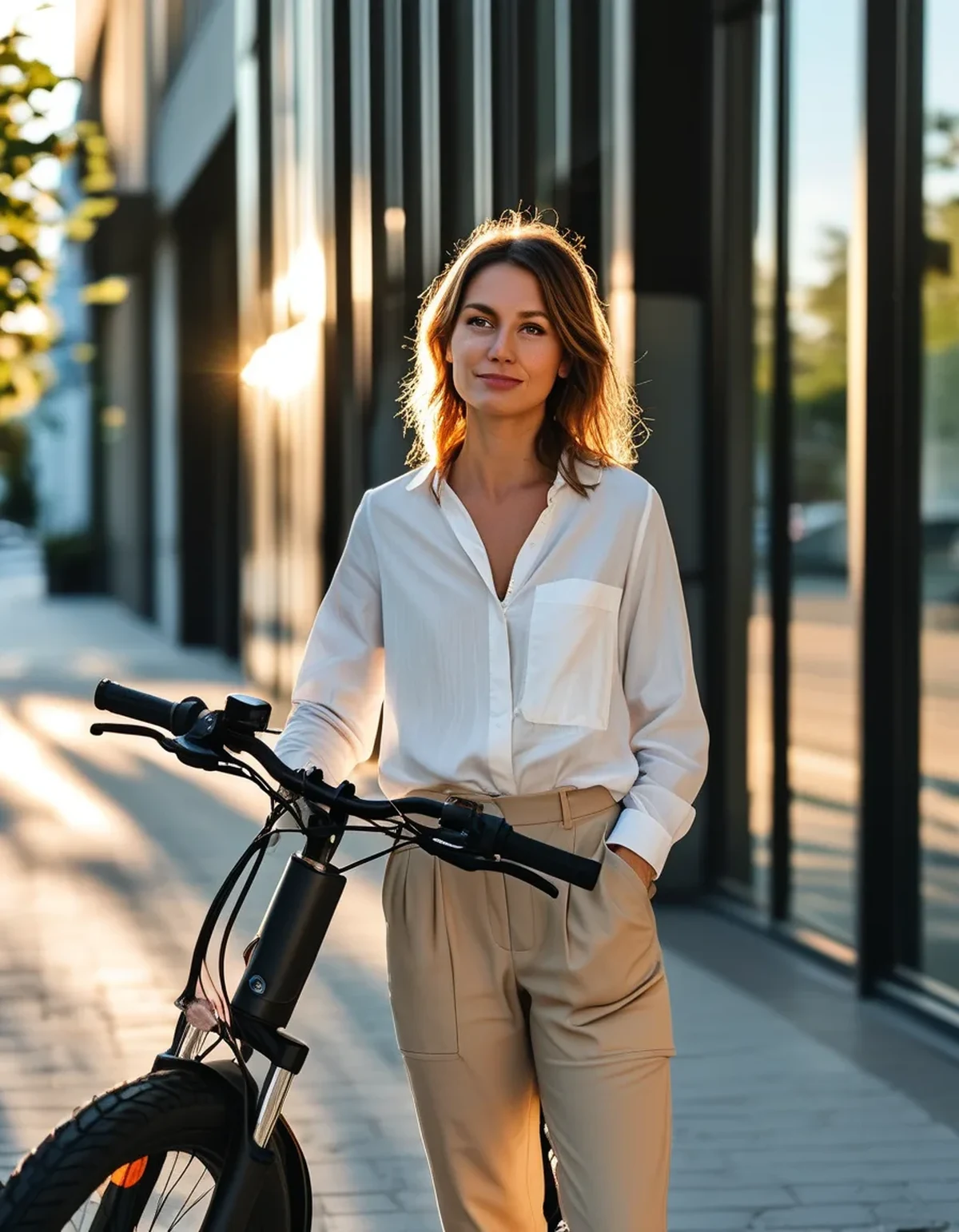
Ride in a technical layer, change the top at work. Even a 30-second change makes the difference between damp and presentable. Roll the work top rather than folding it and it will be fine.
Merino for the base layer if you cannot change. It holds odor far better than polyester over an 8-hour day, which is the actual failure mode of the no-change commute.
Ventilated helmet, and unzip before you start rather than three minutes in. Preemptive venting works better than reactive venting for the same reason as preemptive pacing.
Bar-mounted bag over a backpack. A backpack blocks airflow across the largest sweating surface on your body. This single swap is worth more than most clothing changes.
A small towel and dry deodorant at your desk. Not glamorous, entirely effective, and cheaper than every other item on this list.
What Nobody Tells You About Late-Summer E-Bike Commuting
Morning humidity peaks around sunrise, not midday. A 7am ride in late August is often riding through the most humid hour of the day. Shifting your departure 30 minutes later can genuinely help more than any gear change.
Battery range drops in heat too, not just cold. Sustained high temperatures reduce available range modestly and can trigger thermal throttling on long climbs, which arrives exactly when you were counting on assist.
The last three minutes matter most. Arriving at a slow roll, with the assist high and your effort near zero, gives your core temperature a head start on coming down before you walk inside.
Air-conditioned buildings make it worse before better. Walking from 80F into 68F causes surface blood vessels to constrict while your core is still shedding heat, which is why you can feel like you are sweating more five minutes after you sit down. Give it ten minutes before you decide the ride failed.
FAQ: E-Bike Commute Sweat Questions, Answered
Does maximum assist stop you sweating entirely?
No. On max assist you are still holding a position, balancing and pedaling lightly in warm air. It reduces heat generation meaningfully but does not eliminate it, and riders on max assist often go faster, which cancels out part of the gain.
Is it better to ride slower or shower at work?
A shower solves it completely if you have one. If you do not, pacing the first 10 minutes plus a top change gets most people to acceptable without any facilities.
How much does a backpack really matter?
More than expected. Your back is a large sweating surface and a pack blocks essentially all airflow across it. Riders who switch to a rack or handlebar bag routinely report it as the single most noticeable change they made.
TL;DR:
- Core temperature lags effort by 8 to 12 minutes, so early hard riding is what makes you damp on arrival.
- Ride the first 10 minutes easy, use high assist on the first climb, and keep the average under 15 mph when humid.
- Move the bag off your back and vent before you start rather than after.
- Roll in slow for the last three minutes and give yourself ten minutes inside before judging the result.
E-bike commuting is one of the few genuinely pleasant ways to start a workday. It just requires riding the first ten minutes like you are not in a hurry, which is the hardest easy thing on this list.
Keep Reading
This article is for general informational and styling purposes only. Fit, sizing, and product availability may vary.