Why the Assist Level You Default To Quietly Decides How Much Fitness Benefit You Get
An e-bike’s assist level gets set once on the first ride and then left alone indefinitely, but that single setting quietly determines whether a daily commute functions as real exercise or barely qualifies as movement at all. Here’s the specific tradeoff built into every assist level, and how to set it on purpose instead of by habit.

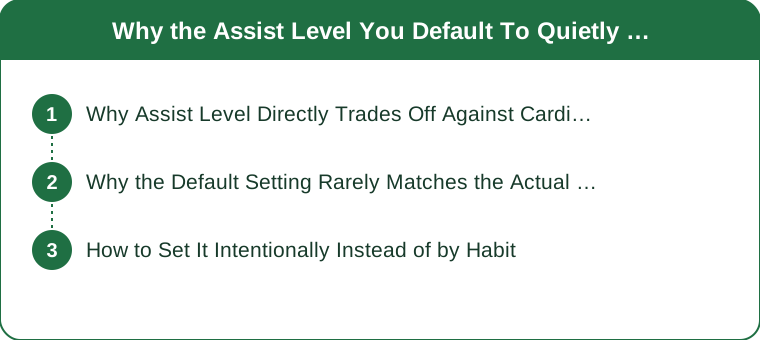
Why Assist Level Directly Trades Off Against Cardio Output
The real mechanism: the the-higher-assist-levels-reduce-the-riders-own-power-contribution-proportionally-lowering-heart-rate-and-effort (the a higher motor assist setting taking on a larger share of the total power needed to move the bike forward, which directly and proportionally reduces how much the rider’s own legs and cardiovascular system have to contribute — the the-assist-level-is-essentially-a-dial-on-how-much-of-the-ride-counts-as-actual-exercise), and the reframe (the assist setting functioning less like a comfort feature and more like a direct dial on the ride’s fitness value).

Why the Default Setting Rarely Matches the Actual Goal
The mismatch: the the-most-riders-settle-on-an-assist-level-for-comfort-on-day-one-and-never-revisit-it-against-a-fitness-goal (the the assist level typically getting chosen during the first ride based on how effortless and pleasant it feels in the moment, then left untouched regardless of whether the rider’s actual goal is commuting comfort or genuine cardio benefit — the the-day-one-comfort-choice-rarely-gets-revisited-against-what-the-rider-actually-wants-from-the-ride), and the frame (a setting optimized for first-ride comfort quietly working against a fitness goal formed weeks or months later).
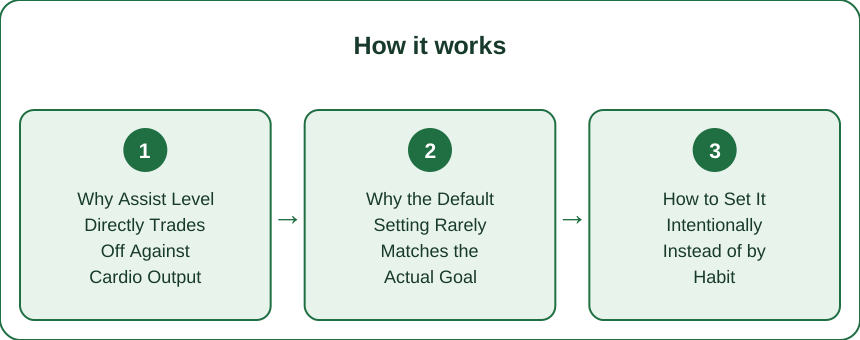
How to Set It Intentionally Instead of by Habit
The practical fix: the the-deliberately-lowering-assist-on-days-fitness-is-the-goal-and-raising-it-on-days-its-purely-transportation-matches-the-setting-to-the-actual-goal (the consciously choosing a lower assist level, or switching it off on certain stretches, specifically on days when the ride is meant to double as a workout, while keeping higher assist for days when arriving quickly and comfortably is the actual priority — the intentionally-varying-assist-by-the-days-actual-goal-is-what-turns-the-setting-into-a-useful-tool-rather-than-a-fixed-habit), and the frame (this small, deliberate adjustment turning the same daily ride into either genuine exercise or comfortable transportation, on purpose, depending on what that day actually calls for)).
A higher assist setting takes on a larger share of the power needed to move the bike, which directly and proportionally reduces how much the rider’s own legs and cardiovascular system actually contribute — meaning the assist level functions less like a comfort feature and more like a direct dial on how much of the ride counts as real exercise. Because most riders lock in that setting for first-ride comfort and never revisit it, deliberately lowering assist on days meant to double as a workout and raising it on days where arriving comfortably matters more turns a fixed habit into an intentional choice that actually matches the ride to that day’s real goal.
Keep Reading
This article is for general informational and styling purposes only. Fit, sizing, and product availability may vary.