Does Your E-Bike Assist Level Actually Change the Workout, or Just the Speed?
Quick Answer: Dropping from high to low assist roughly doubles your own power output, but because the e-bike’s motor is still doing meaningful work at every assist level except off, the actual calorie burn difference between low and medium assist is smaller than most riders expect — the biggest jump is between any assist mode and no assist at all.
Riders switching to lower assist expecting a dramatically harder workout are often surprised the difference feels smaller than anticipated — and there’s a specific reason for that.

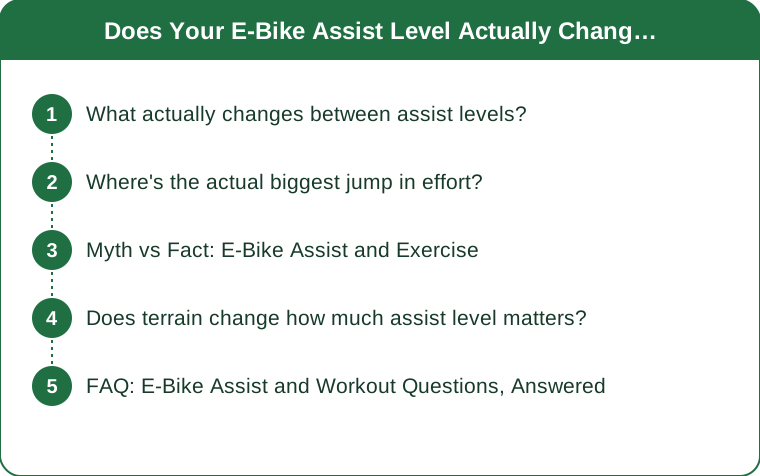
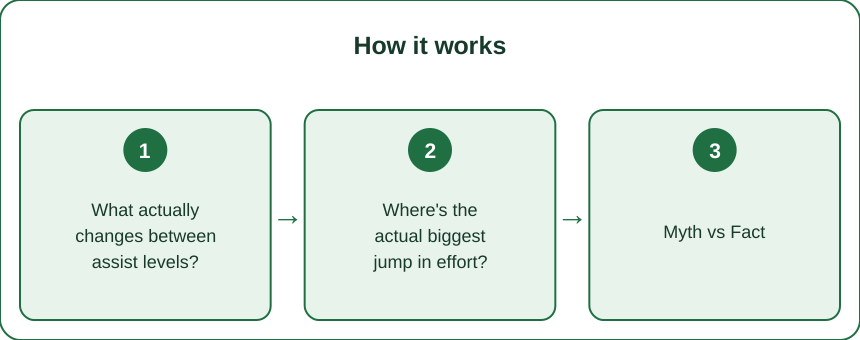
What actually changes between assist levels?
Each assist level changes the ratio of motor power to your own pedaling power for a given speed, not the total power needed to move the bike. On high assist, the motor supplies the large majority of that power; on low assist, you supply more of it — but because total power needed stays roughly constant for a given speed and terrain, the jump from eco to off is bigger than the jump between eco and turbo.
Where’s the actual biggest jump in effort?
Between any assist mode and fully off — turning assist off entirely removes the motor’s contribution completely, requiring you to supply 100% of propulsion power rather than the reduced-but-still-meaningful share the lowest assist setting still provides. This is why riders looking for a genuinely harder workout get more from occasionally riding with assist off than from simply dialing between low and medium.

Myth vs Fact: E-Bike Assist and Exercise
Myth: Riding on eco/low assist gives you basically the same workout as a regular bike. Fact: Even the lowest assist setting on most e-bikes still contributes meaningful power, especially on hills — the workout is real but noticeably lighter than a fully unassisted ride.
Myth: High assist means you’re barely exercising at all. Fact: You still pedal continuously and maintain the same range of motion and cardiovascular engagement as any cycling — it’s lower intensity, not zero effort.
Myth: E-bikes don’t count as real exercise. Fact: Multiple studies on e-bike commuters show meaningful cardiovascular benefit even at higher assist levels, largely because people ride farther and more often than they would otherwise.
Does terrain change how much assist level matters?
Significantly — on flat ground, the difference between assist levels is fairly small since total power demand is low to begin with. On hills, the gap between low and high assist becomes much more noticeable, since climbing is where the motor’s contribution matters most and where dropping assist creates the biggest jump in your own effort.
FAQ: E-Bike Assist and Workout Questions, Answered
What’s the best assist level for a real workout without a fully unassisted ride?
Eco or the lowest available setting on hilly terrain gives the most substantial workout while still retaining some assist for safety and control.
Does higher assist mean you’re pedaling less overall, or just less hard?
You’re typically still pedaling continuously at the same cadence — the difference is in resistance and effort per pedal stroke, not how often you pedal.
Is there a real cardiovascular benefit even on the highest assist setting?
Yes, especially for people who wouldn’t otherwise cycle at all — continuous, moderate movement at any assist level still provides meaningful benefit over no cycling.
TL;DR:
- Assist level changes the power ratio, not the total power needed to move the bike
- The biggest effort jump is between any assist mode and fully off, not between low and medium
- Terrain matters — hills amplify the difference between assist levels far more than flat ground
- Even high assist provides real cardiovascular benefit, especially for people who’d otherwise skip cycling
If you want a noticeably harder ride, occasional no-assist sections matter more than fine-tuning between low and medium settings.
Keep Reading
This article is for general informational and styling purposes only. Fit, sizing, and product availability may vary.